2026-10-16 ·
How to Check for Hidden Smoke Damage in Sunset Beach Homes After a Fire
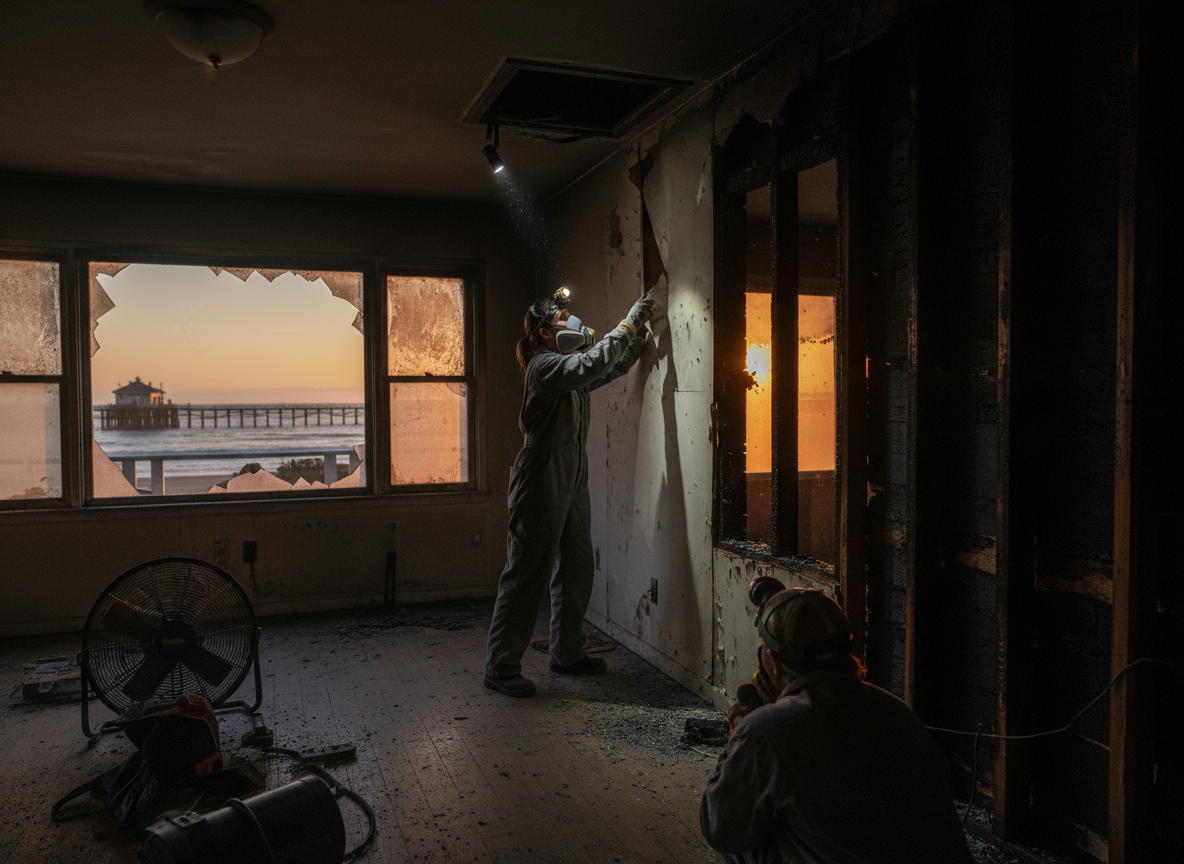
Checking for hidden smoke damage in Sunset Beach homes begins with a room-by-room visual scan of ceilings, baseboards, and electrical outlets combined with odor testing and moisture meter readings. These steps reveal soot migration and acid residue that coastal humidity can trap inside older beach cottages and 1960s ranch homes common along Pacific Coast Highway. Early detection prevents corrosion of wiring and HVAC components that the mild Mediterranean climate keeps in use year-round.
Inspecting Attics and Wall Cavities
Sunset Beach homes built before 1980 often feature open attic spaces and balloon framing that allow smoke to travel upward and settle in insulation. Begin at the access hatch with a bright LED flashlight angled across rafters to spot gray or yellow film on wood and fiberglass. Lift a small section of insulation near the ridge vent and check for dark streaks along the underside of roof decking. Run a gloved hand across drywall returns around recessed lights; any powdery residue indicates soot that has penetrated the cavity. In neighborhoods near the Bolsa Chica wetlands, prevailing onshore breezes push smoke deeper into these voids during evening fires. Document findings with dated photos for insurance purposes before disturbing materials.
Testing HVAC Systems
Central air handlers in Sunset Beach properties frequently draw smoke through return ducts located in hallways or laundry rooms. Turn the system off and remove the filter to examine the blower wheel and evaporator coil for black or oily deposits. Use a mirror and flashlight to look inside the first few feet of supply ducts; any visible film means smoke has circulated throughout the home. Check registers in bedrooms for discoloration on the back side of the grille. Because the local climate keeps systems running most months, even light residue can spread further if the unit restarts. Homeowners should avoid operating the fan until a full assessment confirms no hidden contamination remains in the ductwork.
Using Odor and Residue Indicators
Persistent odors after a fire often signal hidden smoke damage in places that visual checks miss. Close all windows and doors for 30 minutes, then re-enter and note any stale or acrid smell near electrical panels or under sinks. Wipe suspected surfaces with a white cotton cloth dampened in distilled water; brown or yellow transfer indicates soot rather than normal dust. In coastal areas like Sunset Beach and nearby Seal Beach, salt air mixes with smoke residue to create a sticky film that clings to painted surfaces and cabinet interiors. This combination accelerates corrosion on metal fixtures and can affect items stored in garages or crawl spaces common in Huntington Beach-adjacent homes.
Considering Local Climate and Next Steps
The cool-summer Mediterranean conditions in Orange County keep relative humidity moderate, allowing smoke particles to remain dry and airborne longer than in inland zones. This increases the chance that residue settles in hard-to-reach spots such as behind kitchen soffits or inside bathroom exhaust fans. Once initial checks are complete, compare findings against the related guide on how salt air affects cleanup after fire damage in Sunset Beach to understand accelerated corrosion risks. Readers seeking further detail on professional verification can review the smoke remediation process or odor removal after fire methods used by local technicians familiar with 90742 zip code properties.