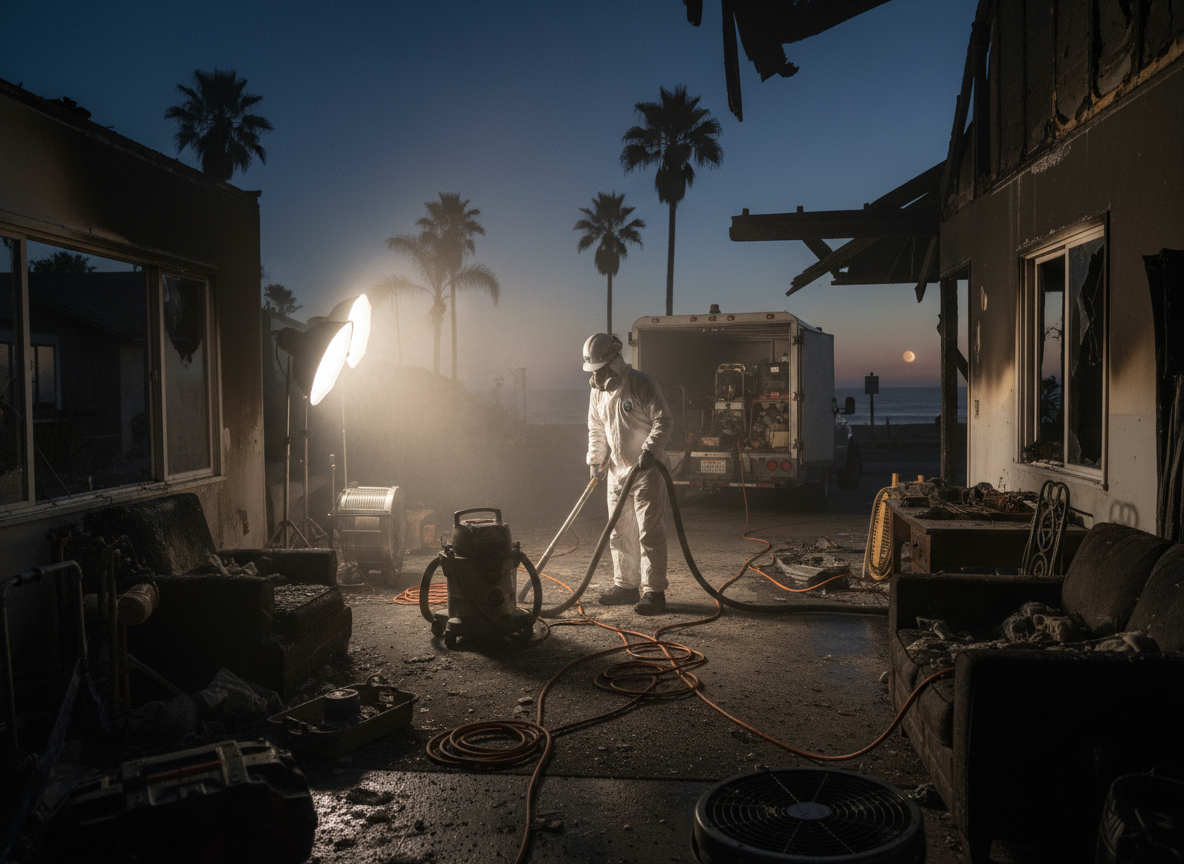
Sunset Beach sits in a mild coastal Mediterranean climate where cool summers and steady onshore breezes carry salt-laden air into every structure. When a fire occurs, this same air accelerates corrosion on metal wiring, HVAC components and fasteners once soot residues are present. Older beach cottages and mid-century homes common along Pacific Coast Highway often contain plaster-over-lath walls and limited attic access, so technicians must trace smoke paths through concealed cavities rather than relying on surface cleaning alone. Immediate 24 hour response prevents secondary moisture damage from coastal humidity interacting with charred materials.
In Orange County coastal neighborhoods, fire damage frequently involves both direct flame and wind-driven smoke that travels through shared rooflines and stucco vents between adjacent properties. Restoration crews must coordinate with local fire marshals on permit requirements for temporary shoring before any debris removal begins. Because many Sunset Beach homes sit on narrow lots with limited side access, equipment staging happens from the street or alley, extending the time needed to establish negative air containment. Technicians inspect for hidden ember pockets in crawl spaces where the water table stays close to grade and salt intrusion already weakens framing.
Smoke odor removal in this environment requires pairing thermal fogging with HEPA air scrubbing calibrated for salt aerosols that bind to soot particles. Failure to address both leaves residual smells that reappear during the next marine layer event. Contents cleaning protocols differ for beach homes because fabrics and electronics absorb both combustion byproducts and sea air salts, demanding separate drying and neutralization steps before storage. Final clearance testing includes surface pH checks on metals to confirm corrosion risk has been mitigated before reoccupancy.
Technician insight
In Sunset Beach the thing that catches most people out with 24 hour fire restoration is how quickly salt air from the ocean turns light soot into an active corrosion problem on copper wiring and HVAC coils inside older beach cottages. Homeowners often focus only on visible char and miss the marine layer pushing humidity through every vent, so we have to run negative air longer than inland jobs to keep metal surfaces from pitting before we finish.
Kitchen fire smoke migration in a Pacific Coast Highway cottage
A late-night cooking fire sent smoke through a shared roofline into an adjacent bedroom. We found soot lodged in plaster-over-lath walls and salt residue already forming on exposed copper pipes. Negative air machines ran for three days while we cleaned cavities and treated metals; the owners returned without odor recurrence during the next marine layer.
How it works
- 1
Emergency Dispatch and Site Security
Technicians arrive within hours, board openings, and establish safety perimeters while documenting conditions for insurance.
- 2
Damage Assessment and Containment
Full inspection identifies smoke migration paths through older plaster walls and stucco vents typical in Sunset Beach homes.
- 3
Soot Removal and Odor Neutralization
HEPA scrubbing and thermal fogging address salt-bound residues before corrosion sets in on metal fixtures.
- 4
Structural Drying and Clearance
Moisture mapping and final testing confirm safe reentry, accounting for coastal humidity effects on remaining materials.
Pricing
Upfront written estimates provided after on-site inspection; final cost depends on extent of hidden smoke paths and materials affected.