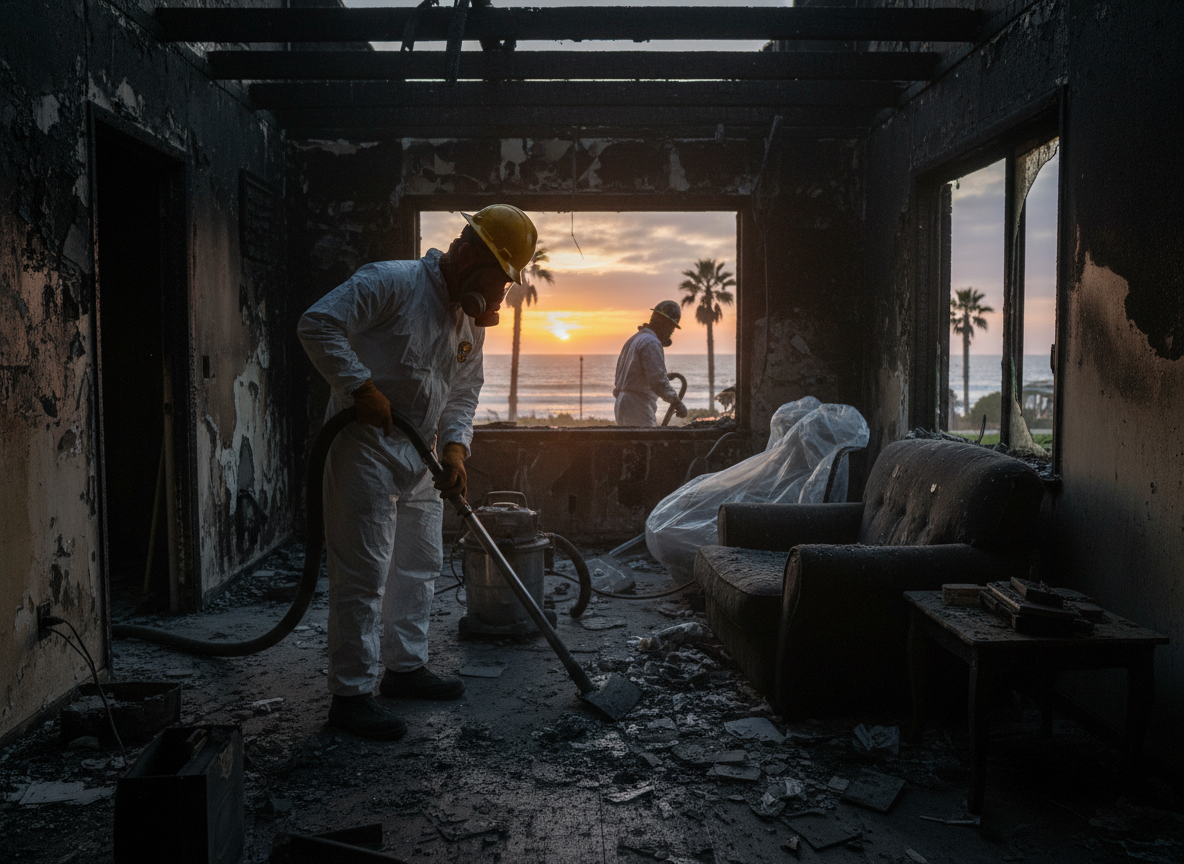
Fire damage clean up in Sunset Beach starts with assessing how smoke travels through the older wooden homes common along Pacific Coast Highway. These structures often have lath and plaster walls that trap fine soot particles, especially after a kitchen or electrical fire. The mild coastal Mediterranean climate with cool summers means residues do not bake out naturally, so crews must use specialized HEPA filtration and dry ice blasting on surfaces to avoid pushing contaminants deeper into insulation. Nearby Seal Beach homes share similar risks when ocean breezes carry smoke across property lines.
Edge cases arise when fires affect crawl spaces or attics where salt air has already corroded wiring and vents. In these situations, crews remove and replace affected HVAC filters immediately while containing the work area to prevent cross-contamination into living spaces. Orange County building codes require documentation of all removed materials, and homeowners should request a written scope before any sealing work begins. Huntington Beach properties a few blocks inland sometimes need extra attention to exterior stucco because wind patterns differ slightly from the immediate beachfront.
Homeowners often overlook secondary damage when soot mixes with the humidity that lingers near the coast. This creates acidic residues that can etch glass and discolor fabrics within days. Professional clean up includes testing pH levels on multiple surfaces and using corrosion inhibitors on metal fixtures before final cleaning. Work is always performed with negative air machines running to protect adjacent rooms in these tightly packed beach neighborhoods.
Technician insight
In Sunset Beach, the thing that catches most people out with fire damage clean up is how the cool ocean air keeps fine soot suspended longer than in drier spots, letting it settle into the nooks of older beach cottages along Pacific Coast Highway and even drift into nearby Seal Beach homes if containment is not tight from the start.
Kitchen Fire in Beach Cottage
Smoke from a stove fire spread through vents in a Sunset Beach home. We found soot embedded in attic insulation that the cool coastal air had kept from drying. We contained the space, removed the affected insulation, and cleaned all surfaces with HEPA equipment. The home passed clearance testing with no lingering odor.
How it works
- 1
Initial Assessment
Technician inspects the property for visible soot, hidden smoke paths, and affected materials while documenting conditions for the homeowner.
- 2
Containment and Safety
Work zones are sealed with plastic barriers and negative air pressure is established to stop soot migration into clean areas.
- 3
Soot Removal
Dry and wet cleaning methods are applied to walls, ceilings, and contents using appropriate agents for the surface types found in local homes.
- 4
Final Clearance
Air quality testing and visual inspection confirm residues are removed before any reconstruction or sealing work proceeds.
Pricing
Upfront quotes provided after on-site inspection.