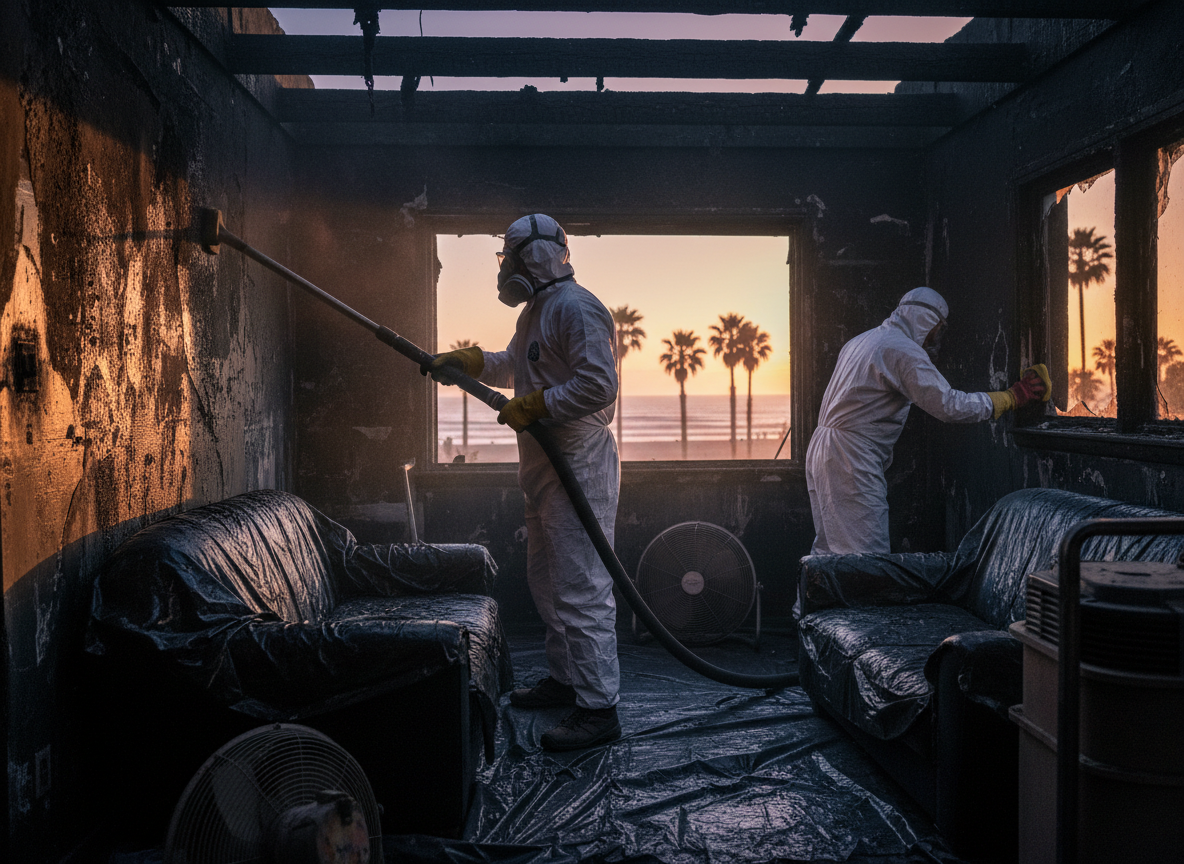
In Sunset Beach, smoke from even small kitchen or electrical fires travels quickly through older single-story beach cottages and the two-story homes along Pacific Coast Highway. Salt air from the ocean accelerates corrosion on metal fixtures and HVAC components once acidic soot settles, so remediation crews must neutralize residues on both porous drywall and the original wood lath-and-plaster walls common in homes built before 1970. Marine-layer humidity often keeps surfaces damp, allowing odors to re-emit days later if thermal fogging or hydroxyl generators are not used after initial HEPA vacuuming and soda-blasting of concrete slabs.
Seal Beach and Huntington Beach properties share the same coastal exposure, but Sunset Beach homes sit closer to the water and experience stronger on-shore breezes that push smoke deeper into attics and under-floor crawl spaces. Technicians routinely find soot trapped in fiberglass batt insulation and in the ductwork of older forced-air systems that lack modern filtration. Removing this requires negative-air machines staged at exterior vents to prevent cross-contamination into neighboring units in the dense beach-block neighborhoods.
Code requirements in Orange County call for documentation of clearance testing before re-occupancy; crews document pre- and post-remediation particle counts and leave written verification for insurance adjusters. Homeowners who attempt DIY cleaning with household products often spread oily soot films across textured ceilings, creating additional labor when professional crews must later re-texture and repaint entire rooms.
Technician insight
In Sunset Beach the thing that catches most people out with smoke remediation is the marine layer that rolls in at night. It keeps soot damp so the odor keeps coming back if you skip the final hydroxyl step after the initial cleaning. Older homes along the highway also have plaster that holds residue longer than drywall, and the salt in the air starts pitting copper pipes within days if the soot is not fully neutralized.
Kitchen Fire Smoke in 1960s Cottage
Smoke from a stovetop fire migrated through a 1962 single-wall home near the pier. Crews found heavy soot inside the original plaster walls and in the crawl-space insulation. After containment, dry cleaning, and two-stage odor treatment, clearance tests passed and the family moved back in without lingering smells.
How it works
- 1
Initial Assessment and Containment
Technicians arrive from the Pacific Coast Highway location, map smoke migration through the home, and set up containment barriers to protect unaffected rooms.
- 2
Soot Removal and Surface Cleaning
HEPA vacuums and dry-sponge cleaning remove loose particulates from walls, ceilings, and contents before any wet cleaning begins.
- 3
Odor Neutralization
Thermal fogging or hydroxyl treatment penetrates porous materials and HVAC systems to break down embedded smoke odors.
- 4
Clearance Testing and Documentation
Air sampling confirms particle levels meet Orange County re-occupancy standards before barriers are removed.
Pricing
Pricing is based on square footage affected, number of rooms, and whether HVAC cleaning or insulation removal is required; upfront written estimates are provided before work begins.