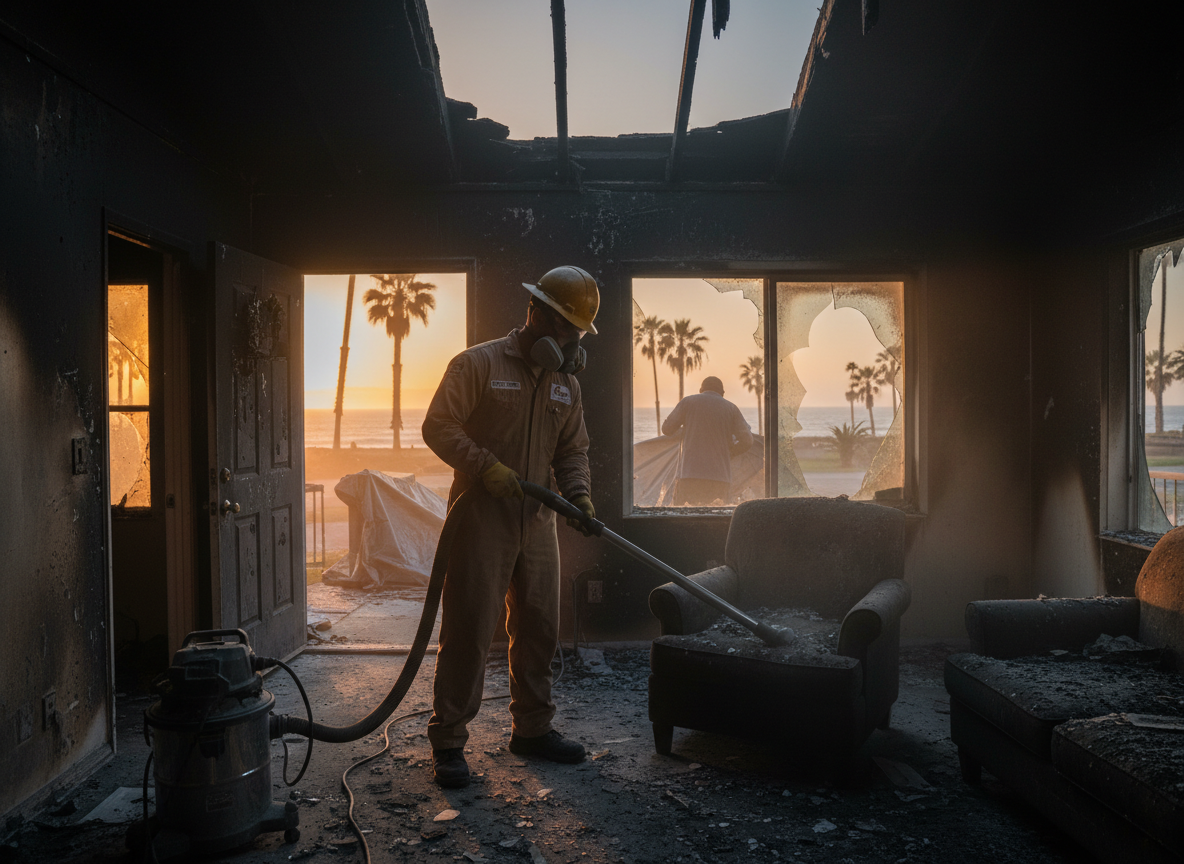
Sunset Beach homes, many built in the mid-century era along Pacific Coast Highway, often feature wood framing and older HVAC systems that allow smoke to travel quickly through walls and attics during a fire. The mild coastal Mediterranean climate with cool summers means humidity stays moderate, but salt air accelerates corrosion on metal fixtures and wiring once soot settles. Technicians must test for hidden moisture from suppression efforts while addressing these specific material interactions to prevent long-term odor and structural issues in Orange County beach properties.
Edge cases in this area frequently involve fires starting in outdoor kitchens or garages that spread to neighboring structures due to tight lot lines common in Sunset Beach. Smoke residues bond differently to stucco and cedar siding prevalent here compared to inland homes, requiring specialized pH-neutral cleaning agents rather than standard solvents. Local building codes in Orange County also mandate updated electrical inspections after any fire event, which can extend timelines if aluminum wiring from the 1960s is present.
Post-fire water extraction must account for the sandy soil conditions near the beach that allow water to migrate laterally under slabs faster than in clay-heavy inland areas. Crews inspect crawl spaces common in older Seal Beach and Huntington Beach homes to locate trapped moisture that could otherwise lead to mold within days of the initial incident. Documentation of every affected layer helps homeowners navigate insurance claims without surprises from hidden damage in these coastal builds.
Technician insight
In Sunset Beach the thing that catches most people out with Emergency fire damage restoration is how quickly smoke travels through the older single-wall construction and shared attics common in homes built before the 1970s. The constant salt air here makes any remaining soot eat into metal flashing and wiring faster than inland jobs, so we always pull baseboards early to check for hidden migration.
Garage fire spreads into attic
A small electrical fire in a detached garage on a tight Sunset Beach lot sent smoke into the main house attic through shared vents. We found heavy soot on rafters and insulation plus water trapped under the slab from firefighters' hoses. After targeted cleaning, drying, and odor treatment we restored the attic and garage without replacing the entire roof deck.
How it works
- 1
Emergency Assessment
Technicians arrive within hours to evaluate structural integrity, smoke paths, and water from suppression at the Sunset Beach site.
- 2
Containment and Safety
Secure the property, remove hazards, and isolate unaffected areas to prevent cross-contamination in coastal homes.
- 3
Soot and Debris Removal
Clean surfaces using methods suited to salt-exposed materials and extract charred debris from attics and wall cavities.
- 4
Drying and Odor Control
Deploy equipment to dry affected zones and apply treatments that neutralize smoke odors in the mild local climate.
- 5
Restoration and Repairs
Rebuild damaged sections and restore finishes while meeting Orange County permitting requirements.
Pricing
Upfront quotes provided after on-site assessment; costs vary by fire size, affected materials, and hidden damage extent.