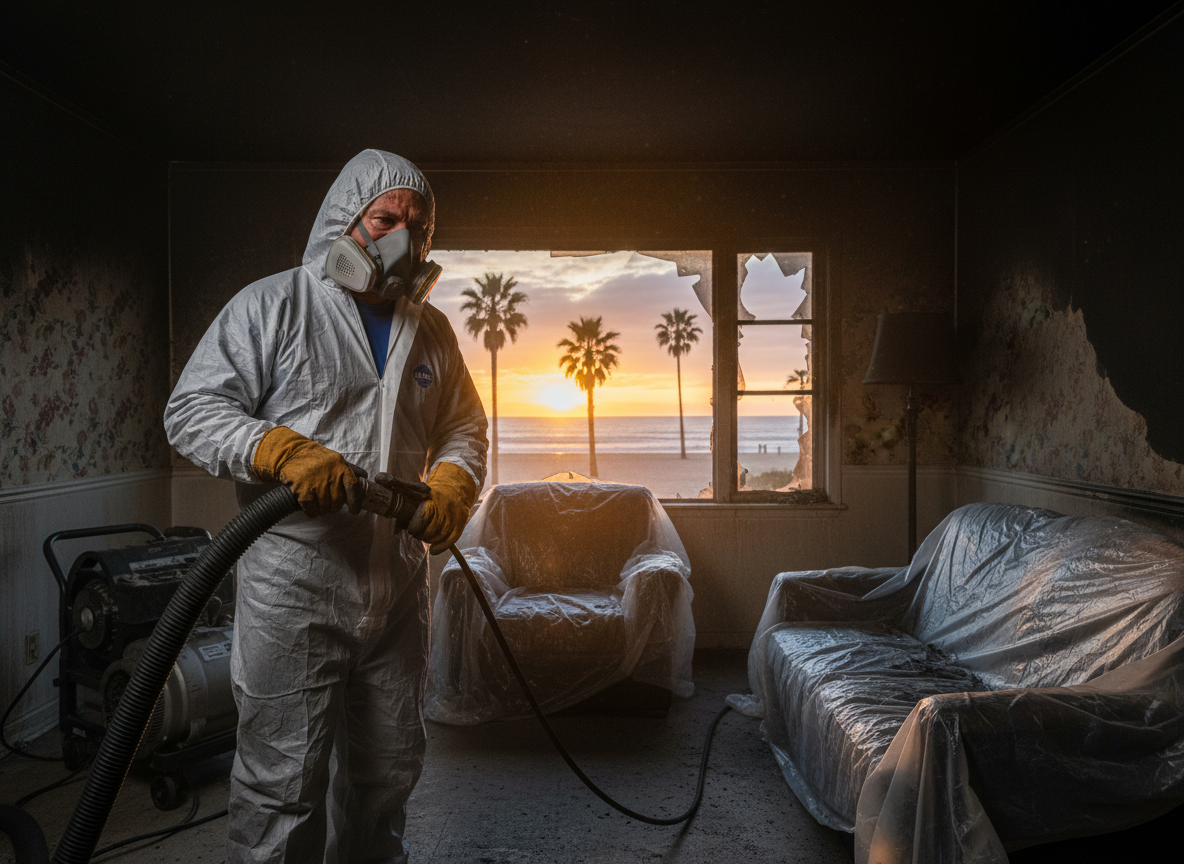
Smoke odors in Sunset Beach homes linger in drywall, insulation, and HVAC systems because the area's mild Mediterranean climate keeps humidity levels steady year-round. Cool summers reduce natural ventilation, allowing volatile organic compounds from burned materials to settle deeper into porous surfaces common in 1960s and 1970s beach cottages along Pacific Coast Highway. Standard air fresheners fail here; professional hydroxyl generators and thermal fogging are needed to break down residues without introducing moisture that could trigger mold in Orange County's coastal air.
Seal Beach and Huntington Beach properties share similar construction with single-wall framing and limited attic insulation, so odor migration often travels through shared walls and crawl spaces during restoration. Technicians must map airflow patterns using the prevailing onshore breezes that push particles inward rather than out. Skipping negative-pressure containment risks cross-contaminating neighboring units, a frequent issue in the compact beachfront blocks.
Fire-damaged wiring and insulation in these older homes release persistent plastic and chemical smells that standard cleaning misses. We isolate affected zones, remove contaminated materials where code allows, and apply encapsulants rated for marine environments. This approach prevents re-release of odors when summer humidity spikes or winter rains increase indoor moisture.
Homeowners often overlook attic and subfloor cavities where smoke settles during low-wind coastal days. Proper deodorization here demands repeated treatments spaced over days to account for temperature swings that reactivate trapped particles.
Technician insight
In Sunset Beach, the thing that catches most people out with Odor removal after fire is how the steady onshore humidity in older single-wall homes keeps smoke residues active in subfloors and attics long after the fire is out. Homeowners try one round of ozone and think it's done, but the marine air reactivates the smell within days unless you run repeated treatments timed to the cool summer evenings.
Persistent odor in 1972 beach cottage
Smoke from a kitchen fire had traveled through the shared attic into two adjacent units on Pacific Coast Highway. We found residues trapped in fiberglass insulation that standard cleaning had missed. After mapping airflow and running three hydroxyl cycles spaced across the mild coastal temperature swings, odors cleared without requiring full insulation replacement.
How it works
- 1
Initial Assessment
Inspect all affected rooms, HVAC runs, and structural cavities to identify odor sources specific to Sunset Beach construction.
- 2
Containment Setup
Establish negative air pressure zones to prevent smoke particle migration into unaffected areas of neighboring homes.
- 3
Source Removal
Extract or encapsulate porous materials holding residues before applying advanced oxidation equipment.
- 4
Deodorization Treatment
Deploy hydroxyl generators and thermal fogging calibrated for the area's steady humidity levels.
- 5
Verification
Test air quality and surfaces over multiple days to confirm odors do not return under typical coastal conditions.
Pricing
Cost depends on square footage affected, depth of smoke penetration into older framing, and number of treatment cycles required by local humidity.