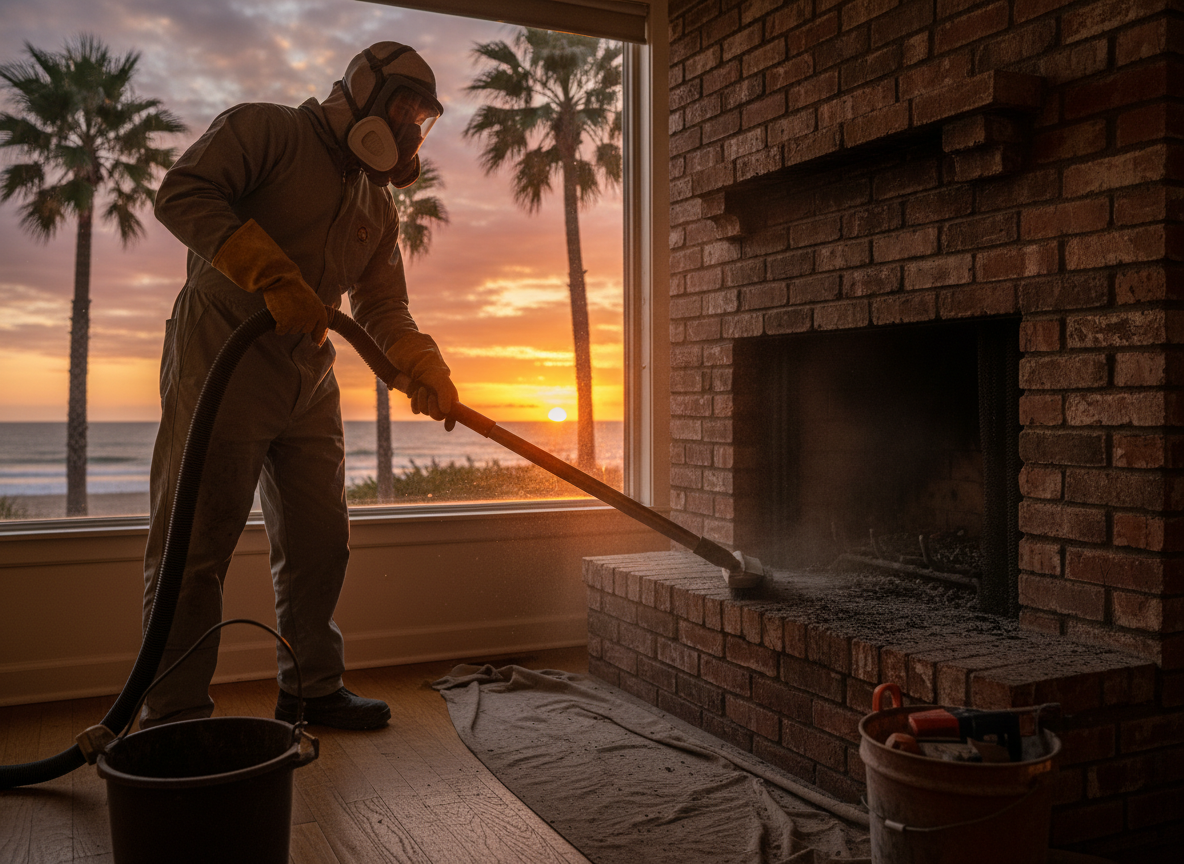
Soot from structure fires in Sunset Beach carries acidic residues that etch finishes on older stucco and wood homes common along Pacific Coast Highway. The mild coastal Mediterranean climate with cool summers keeps humidity levels higher than inland Orange County spots, allowing soot to bond more tightly to surfaces like plaster walls and hardwood floors found in Seal Beach and Huntington Beach properties. Technicians must test pH levels before cleaning to avoid spreading corrosion into HVAC systems that pull in ocean air.
Edge cases include soot migration through shared walls in duplexes near the Sunset Beach pier where negative air pressure from sea breezes can pull particles into unaffected rooms. Standard HEPA vacuuming alone fails on porous materials such as popcorn ceilings or unsealed brick fireplaces typical in 1960s builds. Specialized emulsifiers and dry sponge techniques are required, followed by odor neutralization that accounts for lingering salt-infused smoke.
Code considerations arise when soot contaminates electrical panels in homes built before updated Orange County wiring standards. Removing residues without disturbing asbestos-containing insulation in older attics demands containment protocols that prevent cross-contamination into living spaces. Homeowners often overlook hidden soot in ductwork that later recirculates during the next cool summer evening.
Proper documentation of pre-existing salt damage versus new soot etching helps differentiate restoration scope on coastal lots where wind-driven particles already stress exterior paint.
Technician insight
In Sunset Beach, the thing that catches most people out with soot removal is how the constant onshore breeze pushes fine particles deep into the wall cavities of 1950s-1970s beach cottages. Homeowners try wiping visible surfaces themselves and end up driving the acidic soot further into the plaster, especially when summer humidity keeps everything slightly damp.
Soot in a Pacific Coast Highway Duplex
Fire in the unit next door sent soot through shared vents into a 1964 Sunset Beach duplex. Inspection revealed heavy residue inside the HVAC and behind baseboards. Crews contained the space, cleaned ducts with specialized tools, and treated walls with pH-balanced sponges. The homeowners returned to a home free of lingering smoke odor within the original timeline.
How it works
- 1
Initial Assessment
Inspect all affected rooms in the Sunset Beach property, document soot depth on surfaces, and test for hidden migration through HVAC and wall cavities.
- 2
Containment Setup
Isolate work zones with plastic sheeting and negative air machines to stop soot from spreading into unaffected areas of the home.
- 3
Surface Cleaning
Apply pH-neutral cleaners and dry sponges to remove acidic residues from walls, ceilings, and contents without damaging original finishes.
- 4
HVAC and Odor Treatment
Clean ducts and apply odor counteractants formulated for salt-air environments before final clearance testing.
Pricing
Pricing depends on square footage affected, surface types, and whether HVAC cleaning is required. Upfront quotes provided after on-site inspection.