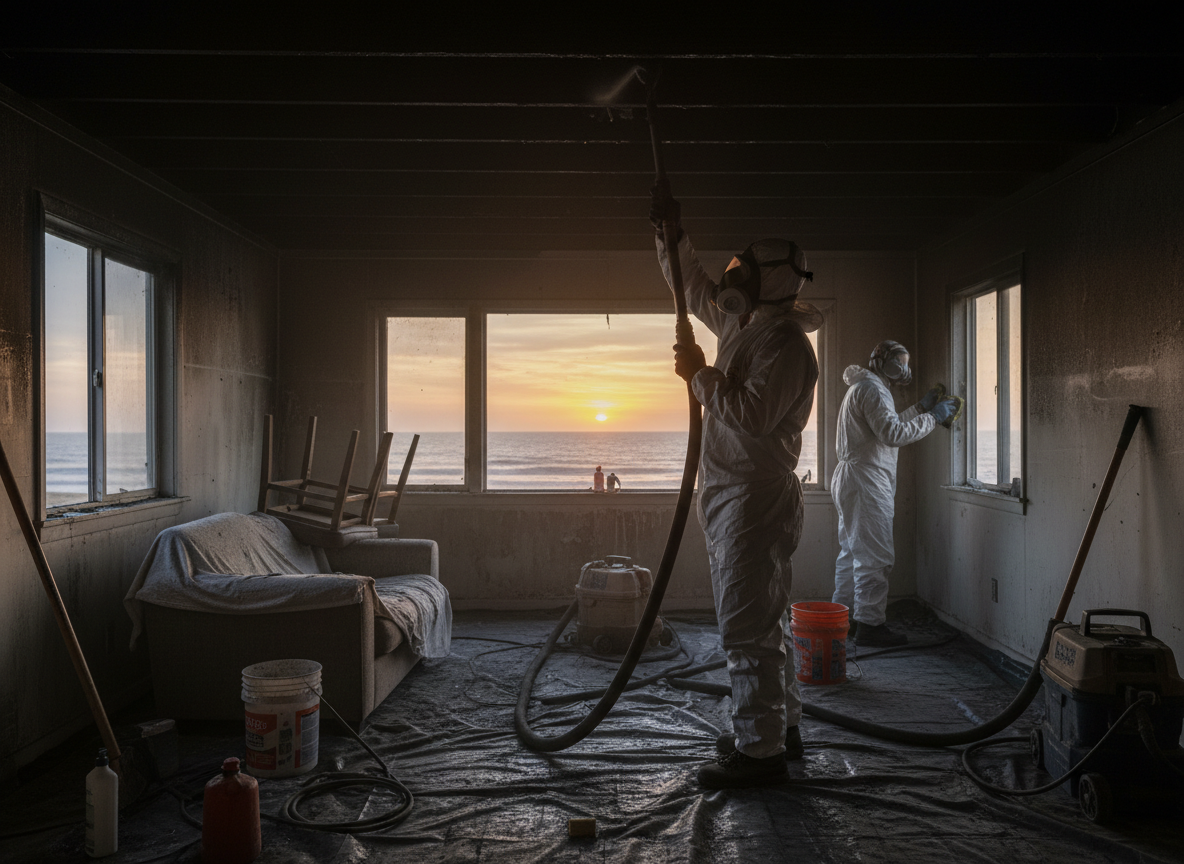
In Sunset Beach, smoke from structure fires travels quickly through older wood-framed homes built along the canals and near Pacific Coast Highway. Soot settles into textured ceilings, lath-and-plaster walls, and HVAC ductwork that runs through unconditioned attic spaces common in the neighborhood. The mild coastal Mediterranean climate keeps humidity levels moderate year-round, which slows the drying of acidic soot residues and allows odors to linger in porous materials like insulation and cabinetry if not treated promptly.
Restoration crews must isolate affected zones early because ocean breezes can push smoke particles into adjacent rooms and even neighboring properties in tight blocks between Seal Beach and Huntington Beach. Specialized HEPA filtration and hydroxyl generators are required to neutralize odors without introducing additional moisture that could affect stucco exteriors or encourage mold in crawl spaces typical of the area. Skipping thermal fogging or proper neutralization often leads to recurring smells when summer temperatures rise, even after visible soot is removed.
Edge cases include smoke migration into electrical panels and recessed lighting fixtures, where residue can cause future shorts if not cleaned to code. Technicians also check for hidden damage behind built-in cabinetry and under flooring in single-story ranch homes prevalent on the west side of Sunset Beach. Proper documentation of pre-existing wear from salt air exposure helps avoid disputes during insurance claims common in Orange County coastal zones.
Technician insight
In Sunset Beach the thing that catches most people out with smoke damage restoration is how the steady ocean humidity keeps soot acidic longer in older canal-side homes, so if you skip proper neutralization the smell returns the first warm weekend even after the walls look clean.
Kitchen fire smoke in canal home
Smoke from a stovetop flare-up migrated through open ductwork into bedrooms of a single-story home near the Sunset Beach canal. We found heavy soot on ceiling textures and inside the HVAC return. After containment and multi-stage cleaning with odor treatment, the home passed air testing and was cleared without further odor complaints.
How it works
- 1
Initial Assessment
Inspect all affected rooms, HVAC systems, and hidden cavities to map smoke migration patterns specific to Sunset Beach construction.
- 2
Containment and Protection
Seal off impacted areas with plastic barriers and negative air machines to prevent cross-contamination into unaffected sections of the home.
- 3
Soot Removal
Use dry cleaning sponges, HEPA vacuums, and chemical sponges on surfaces while protecting delicate finishes common in coastal homes.
- 4
Odor Neutralization
Apply thermal fogging and hydroxyl treatment throughout ductwork and porous materials to eliminate embedded smoke odors.
- 5
Final Clearance
Conduct post-cleaning inspection and air quality testing before returning the property to the homeowner.
Pricing
Pricing varies by the volume of affected space, depth of soot penetration into HVAC and porous materials, and whether contents require off-site cleaning.