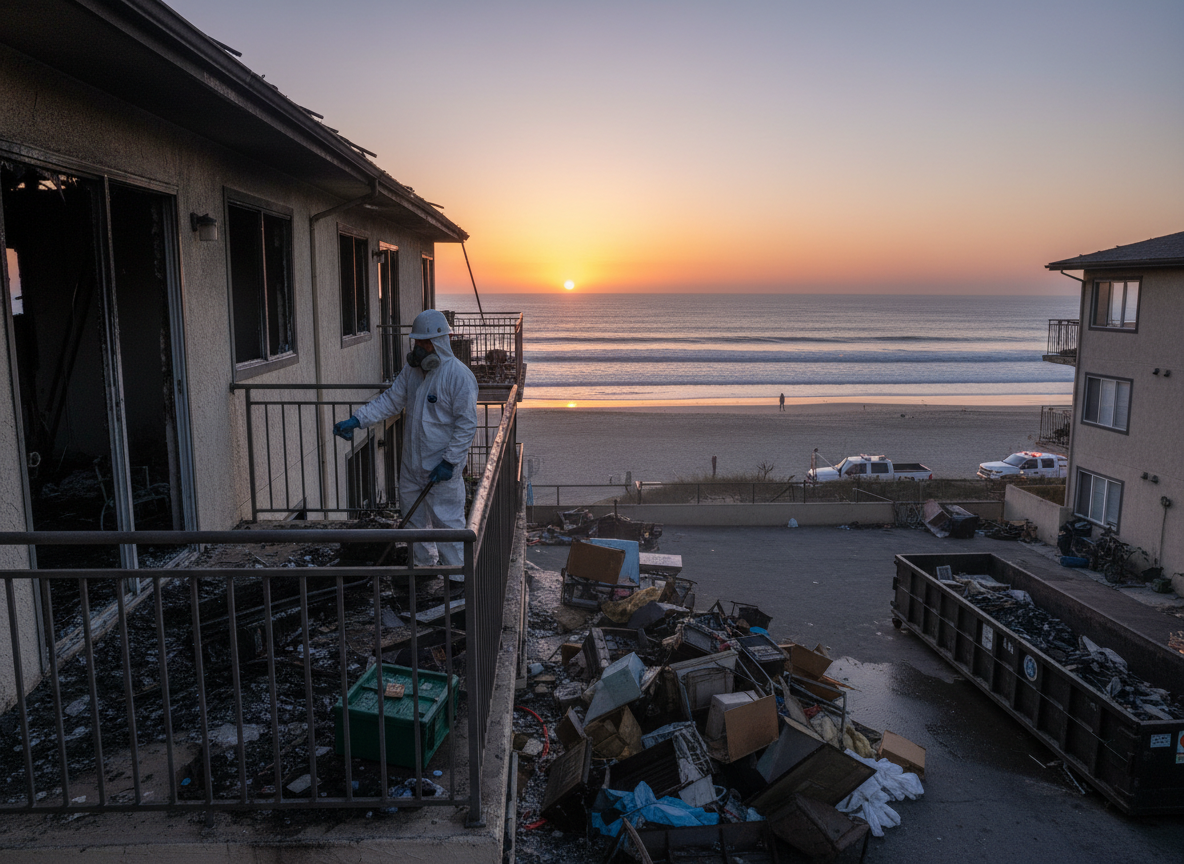
Apartment fires in Sunset Beach often spread soot through HVAC systems and shared walls in the older multi-unit buildings common along Pacific Coast Highway. The mild coastal Mediterranean climate keeps summers cool but allows humidity to linger after water suppression, forcing restorers to dry cavities thoroughly to prevent secondary mold growth between units. Technicians must map smoke paths floor by floor because beach breezes push particulates into unexpected areas like electrical chases and attic spaces shared with neighboring properties in Seal Beach and Huntington Beach.
Edge cases include vinyl flooring off-gassing when heated and drywall that has absorbed corrosive smoke residues common in older Orange County construction. Code requirements in Sunset Beach mandate proper disposal of contaminated materials and verification that no odors remain before re-occupancy, especially when units share plumbing stacks. Crews use air scrubbers and hydroxyl generators calibrated for the steady ocean air flow that can otherwise re-circulate fine particles days after the initial event.
Hidden damage frequently appears in insulation and under sinks where water from suppression mixes with salt air, accelerating corrosion on metal fixtures. Work in these buildings requires coordination with property managers to isolate affected apartments without displacing tenants in adjacent units for longer than necessary.
Technician insight
In Sunset Beach, the thing that catches most people out with Apartment fire cleanup is how the cool coastal air keeps moisture trapped inside older plaster walls long after the fire is out, especially when suppression water mixes with salt from the nearby ocean. Homeowners often skip the cavity drying step and end up with hidden corrosion months later.
Third-Floor Kitchen Fire
A cooking fire in a Sunset Beach apartment sent smoke through shared HVAC into two lower units. We found soot lodged in wall cavities and insulation still damp from suppression water. Crews contained the floors, removed residues, and ran drying equipment until readings matched coastal norms. All three units passed clearance testing within five days.
How it works
- 1
Initial Assessment
Technicians arrive within hours, document all affected units, and test for hidden smoke in shared walls and HVAC.
- 2
Containment and Safety
Plastic barriers and negative air machines isolate the fire unit to stop soot migration into neighboring apartments.
- 3
Soot and Residue Removal
HEPA vacuuming, chemical sponges, and specialized cleaners address surfaces, fabrics, and cavities.
- 4
Drying and Odor Control
Dehumidifiers and air scrubbers run until moisture levels meet coastal standards and odors are eliminated.
- 5
Final Verification
Clearance testing confirms no residue or moisture remains before units are released for re-occupancy.
Pricing
Pricing varies with apartment size, number of affected units, and depth of smoke penetration; upfront assessments provided on site.