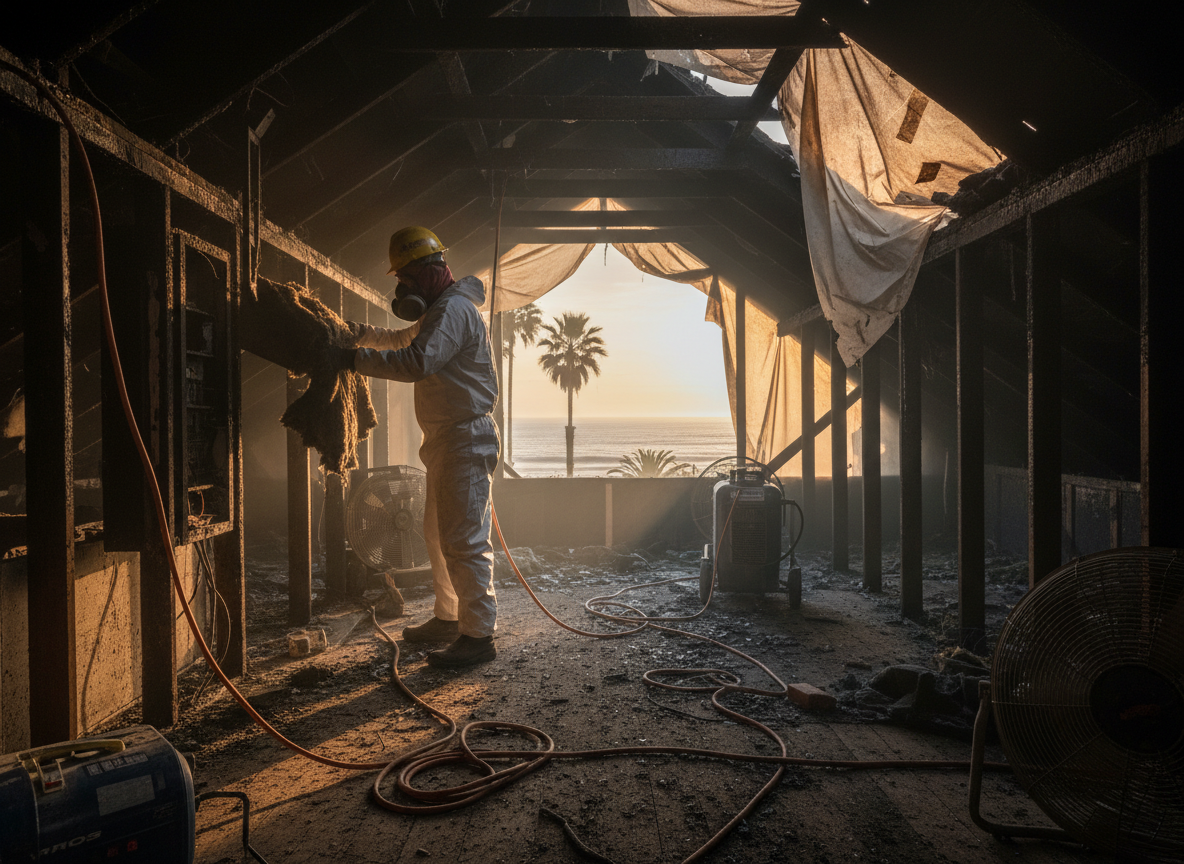
Attic fires in Sunset Beach often start from overloaded electrical circuits in older beach cottages built before modern wiring standards became common in Orange County. These homes frequently feature wood-framed attics with fiberglass or cellulose insulation that readily absorbs soot particles carried by the mild coastal Mediterranean climate. Once winter temperatures drop and humidity rises, trapped residues can produce persistent odors that travel through shared vents into living spaces in nearby Seal Beach and Huntington Beach neighborhoods. Restoration requires removing affected insulation entirely rather than surface cleaning, followed by HEPA vacuuming of rafters and sheathing to prevent recontamination during the cool summer months when windows stay open longer.
Edge cases include hidden charring behind knob-and-tube wiring runs or in areas where roof vents pull in salt-laden air that accelerates corrosion on metal fasteners. Technicians must check for compromised collar ties and ridge boards, as even small fires can weaken these elements in the lightweight construction typical along Pacific Coast Highway. Code compliance in Orange County often requires updating attic ventilation and adding fire-blocking when insulation is replaced, especially in homes near the water where moisture cycling increases mold risk after any water used during suppression. Homeowners should avoid disturbing the space until assessment, since disturbing soot can embed particles deeper into porous materials.
The process accounts for the flat terrain and narrow lots common in Sunset Beach, which limit equipment access and require careful staging to avoid impacting neighboring properties. Drying times extend in the cool, humid air compared to inland areas, so dehumidifiers run longer to reach safe moisture levels before new insulation installation. Warning signs of incomplete prior work include recurring musty smells or staining on ceiling drywall months after the incident, often traced to missed soot in recessed lighting housings or along shared walls with adjacent Huntington Beach homes.
Technician insight
In Sunset Beach, the thing that catches most people out with attic fire restoration is how the salt air from the nearby ocean accelerates corrosion on nails and wiring inside the attic, turning what looks like minor char into a bigger structural job once you start pulling insulation.
Electrical Attic Fire Near Pacific Coast Highway
Smoke appeared in a Sunset Beach home after an outlet short in the attic. Inspection revealed soot throughout fiberglass batts and along rafters common in older coastal construction. Crews contained the space, removed insulation, cleaned all surfaces accounting for the humid air that holds odors, and reinstalled code-compliant materials. The homeowners returned without recurring smells even during the cool summer evenings when windows stay open.
How it works
- 1
Initial Assessment and Safety Check
Technicians arrive 24/7 to evaluate fire origin, smoke migration paths, and structural stability while documenting conditions for insurance.
- 2
Containment and Soot Removal
Negative air machines isolate the attic; HEPA filtration and specialized vacuums extract residues from wood, insulation, and vents.
- 3
Material Removal and Cleaning
Damaged insulation and charred sections are removed; rafters and sheathing receive antimicrobial and odor-neutralizing treatments.
- 4
Restoration and Verification
New insulation is installed per local codes, electrical components inspected, and air quality tested before final walkthrough.
Pricing
Costs depend on attic size, extent of soot penetration, and any structural repairs needed; upfront quotes provided after inspection.