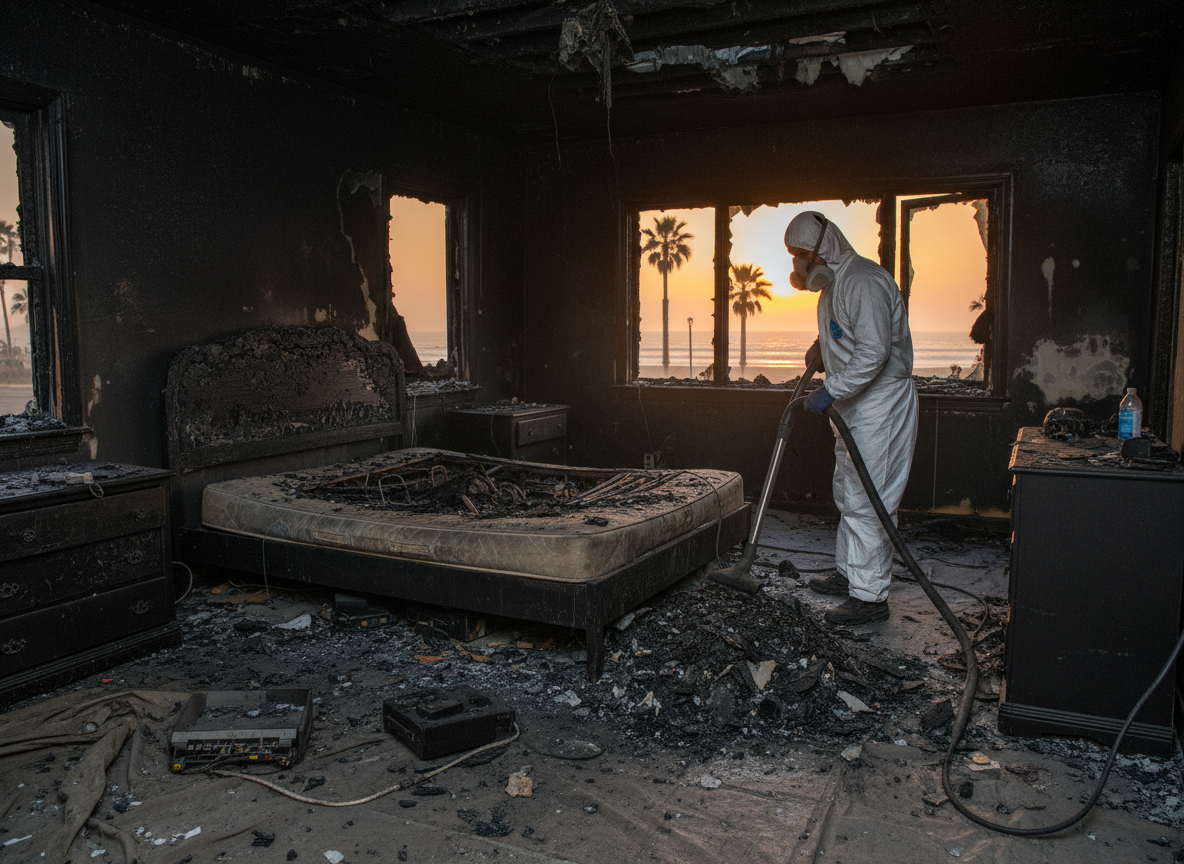
Bedroom fire damage cleanup in Sunset Beach requires careful attention to how smoke travels through older wood-framed homes common along Pacific Coast Highway. Soot settles into carpet pads, mattress foundations, and behind baseboards, and the mild coastal Mediterranean climate with cool summers means humidity can keep residues moist longer, slowing dry-out times compared to inland Orange County spots. Crews start by isolating the room with plastic barriers to prevent cross-contamination into hallways or adjacent living spaces typical in these compact beach neighborhoods.
In Sunset Beach properties, electrical wiring runs through walls built decades ago, so any bedroom fire often leaves hidden charring that must be cut out before new drywall goes up. Nearby Seal Beach and Huntington Beach homes share similar exposure to salt air, which can accelerate corrosion on metal fixtures after a fire if not cleaned promptly. Technicians test surfaces with chemical swabs to confirm neutralization of acidic soot before sealing, because skipping this step leads to recurring odors that linger in the cool evening air.
Cleanup crews remove and bag all soft goods first, including curtains and bedding that absorb smoke quickly in these smaller bedroom layouts. They then use air scrubbers with HEPA filtration to capture fine particles that would otherwise recirculate through the home's ventilation. Final clearance involves checking under windowsills and inside closets where soot hides, ensuring the space meets habitability standards before reconstruction begins.
Homeowners in Sunset Beach often discover that bedroom fires affect adjoining bathrooms or closets because of shared wall cavities. Restoration teams document every layer removed so insurance adjusters see the full scope without surprises. Work stays coordinated around the 24/7 availability from the Pacific Coast Highway location to respond before weather shifts bring marine layer moisture that can set stains.
Technician insight
In Sunset Beach, the thing that catches most people out with Bedroom fire damage cleanup is how the cool marine layer keeps soot damp inside wall cavities for days after the fire is out. Older homes along Pacific Coast Highway have plaster that cracks and traps residue differently than newer drywall, so you have to open more surfaces than homeowners expect. That extra demo changes the whole timeline before you can even start sealing.
Smoke in Master Bedroom After Kitchen Fire
A kitchen fire sent smoke through a Sunset Beach home's shared vents into the master bedroom. We found soot embedded in the carpet pad and behind the headboard wall. Crews removed the affected drywall sections, cleaned all surfaces, and ran dehumidifiers until readings were clear. The bedroom was restored and safe to use within the week.
How it works
- 1
Initial Assessment
Technicians arrive from the Sunset Beach base and document all affected surfaces in the bedroom while checking for hidden spread into walls or ceilings.
- 2
Containment and Removal
Plastic barriers isolate the room, then all charred materials and smoke-damaged contents are removed and disposed of properly.
- 3
Cleaning and Deodorization
HEPA scrubbing and specialized agents neutralize soot on remaining surfaces, with extra attention to fabrics and wood in the coastal humidity.
- 4
Drying and Verification
Moisture meters confirm walls and floors are dry before any reconstruction, followed by air quality testing.
Pricing
Pricing depends on fire size, materials affected, and time required; we provide upfront quotes after on-site inspection.