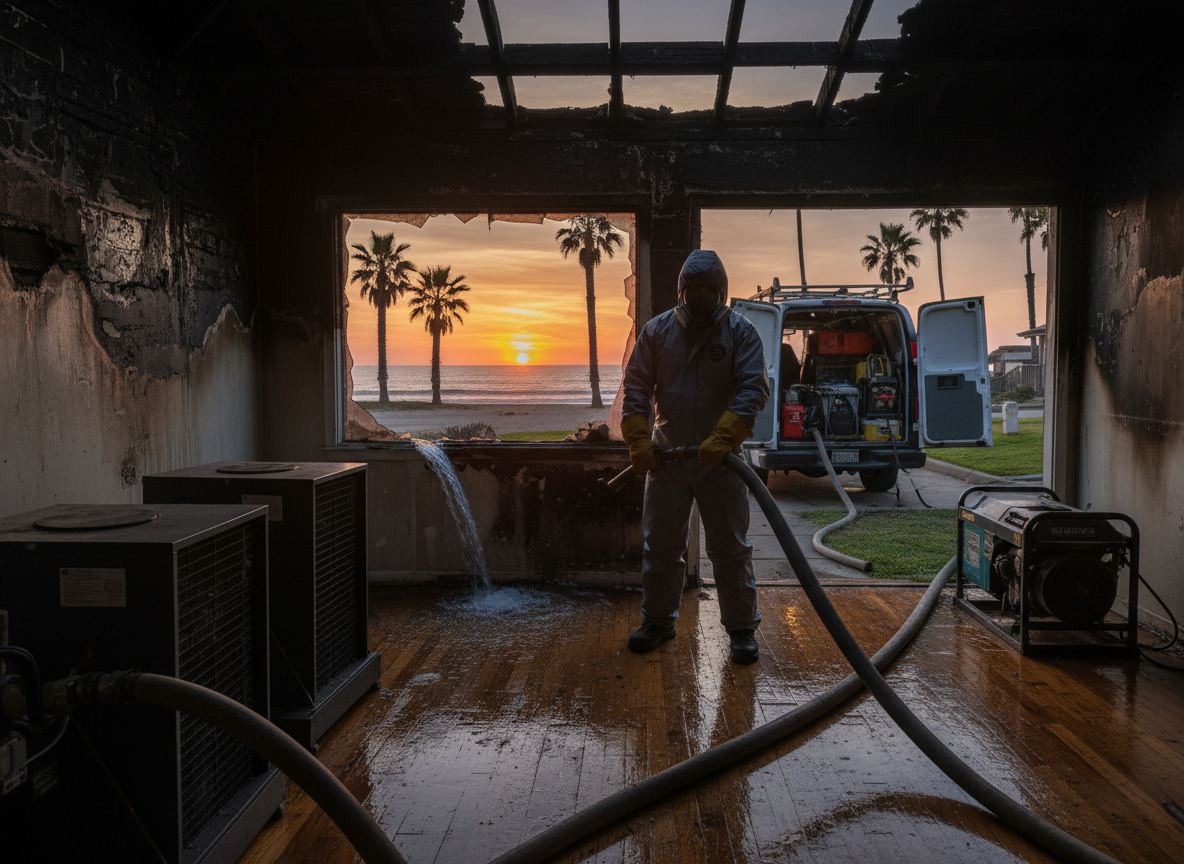
Sunset Beach sits on a narrow strip between the Pacific and the wetlands, where most homes date from the 1940s through 1970s and feature wood framing, plaster walls, and raised foundations. When a structure fire occurs, the water used to suppress it soaks into those materials and mixes with salt-laden air that blows in daily. That combination speeds corrosion on wiring, HVAC components, and metal fasteners long after the smoke clears. Crews must pull baseboards and open wall cavities quickly because the mild Mediterranean climate keeps humidity high enough at night to prevent natural drying.
Flooding from winter storms or king tides adds another layer. Brackish water enters crawl spaces under many bungalows along Pacific Coast Highway and leaves behind chlorides that attack rebar in slab foundations. Standard moisture meters can miss pockets trapped behind stucco or under built-up roofing. Restoration teams here routinely use thermal imaging and cut exploratory openings in ceilings to locate hidden saturation before mold sets in during the cool summer evenings.
Code requirements in Orange County also shape the work. Any electrical or plumbing work triggered by fire or water damage must meet current Title 24 standards, which often means upgrading aluminum wiring common in 1960s homes. Homeowners along the beachfront learn that insurance carriers now require documentation of corrosion mitigation because salt air shortens the life of restored systems.
The practical sequence always starts with a full-site assessment that accounts for both the burn pattern and the path of suppression water through the specific lot grade and drainage toward the bay.
Technician insight
In Sunset Beach the thing that catches most people out with fire and flood restoration is how quickly salt air turns standing water acidic once it mixes with soot; if you do not pull the baseboards and treat the framing within the first 48 hours the corrosion travels up the studs and ruins outlets that were never near the fire.
Pacific Coast Highway cottage after kitchen fire
Suppression water ran under the 1950s wood floor and into the crawl space. Salt air had already begun corroding the electrical boxes by the time we arrived. We opened the perimeter walls, extracted brackish water, treated all metal, and dried the structure for six days before rebuilding to current code.
How it works
- 1
Site Assessment
Inspect structure, map water migration, and test for hidden corrosion caused by salt air mixing with soot and suppression water.
- 2
Containment and Safety
Isolate affected areas, remove standing water, and protect unaffected rooms from cross-contamination in the tight lots typical of Sunset Beach.
- 3
Material Removal
Extract saturated drywall, insulation, and flooring while documenting items that must be replaced to meet current Orange County building codes.
- 4
Drying and Corrosion Control
Deploy air movers and dehumidifiers, then apply corrosion inhibitors to metal components exposed to the coastal environment.
- 5
Rebuild and Final Clearance
Restore finishes, verify moisture levels, and coordinate final inspection with the homeowner and insurance adjuster.
Pricing
Upfront quotes provided after on-site inspection; final cost depends on extent of hidden water migration and required code upgrades.