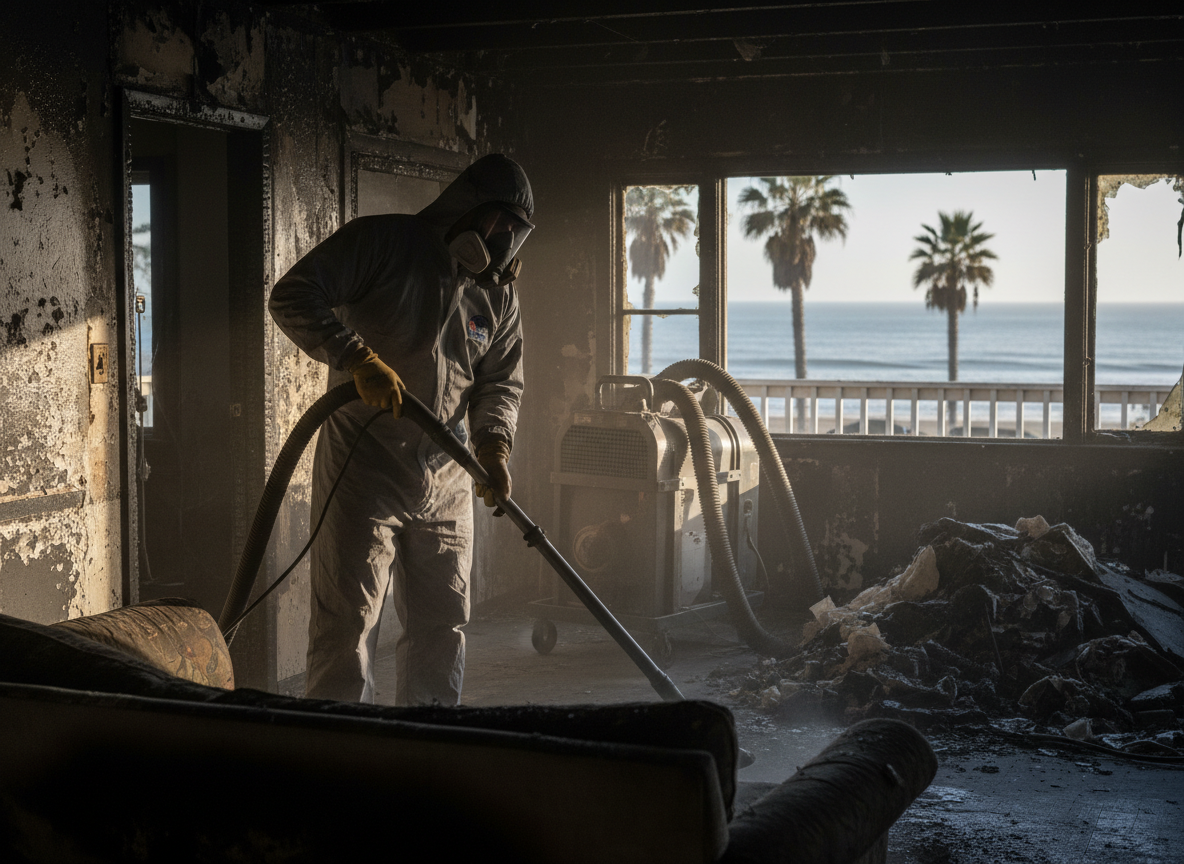
Coastal homes in Sunset Beach and adjacent Seal Beach often feature older wood-frame construction with lath-and-plaster interiors that absorb smoke deeply into cavities. After a fire, the mild Mediterranean climate keeps temperatures moderate, but the steady ocean breeze pushes soot through HVAC systems and under siding, requiring negative-pressure containment before any cleaning begins. Technicians must map airflow paths created by prevailing winds rather than relying on standard interior room sequencing.
Smoke residue on stucco exteriors and salt-air-exposed metal fixtures creates secondary corrosion that appears weeks later if not neutralized during the initial pass. In Huntington Beach properties with slab-on-grade foundations, water used for suppression can migrate under the slab and re-emerge as efflorescence mixed with soot, demanding moisture meters and targeted drying before odor-sealing primers are applied. Skipping this step leads to recurring musty smells that standard ozone treatments cannot resolve.
Edge cases include attic insulation in 1960s beach cottages where fiberglass batts hold particulates that off-gas when disturbed during roof work. Restoration crews coordinate with local Orange County permitting offices when structural char affects load-bearing members near the Pacific Coast Highway corridor, ensuring repairs meet coastal wind-load requirements without delaying smoke cleanup timelines.
Technician insight
In Sunset Beach the ocean breeze catches most people out because it pushes smoke under eaves and into Seal Beach side yards before we arrive. Older plaster walls hold residue that reappears after the first rain if we do not neutralize the salts first.
Kitchen Fire Smoke Migration
A cooking fire in a Sunset Beach cottage sent soot through the shared attic into the adjacent unit. Inspection revealed residue in insulation batts and HVAC ducts that standard cleaning would miss. We isolated the attic, removed contaminated insulation, and ran negative air machines for 48 hours before sealing. The homeowner returned without recurring odor complaints.
How it works
- 1
Emergency Board-Up and Site Assessment
Secure the structure and document all affected areas using moisture and particulate readings tailored to coastal air movement.
- 2
Soot and Residue Removal
Apply pH-neutral cleaners to wood, plaster, and metal surfaces while running HEPA air scrubbers to capture airborne particles carried by ocean breezes.
- 3
Odor Neutralization and Containment
Install hydroxyl generators and seal porous materials after confirming no hidden moisture remains under slabs or in wall cavities.
- 4
Final Clearance and Reconstruction Coordination
Perform third-party air quality testing and hand off to licensed contractors for any structural repairs required by local codes.
Pricing
Upfront quotes after on-site inspection; final cost depends on square footage affected, materials involved, and whether hidden smoke migration into neighboring units occurs.