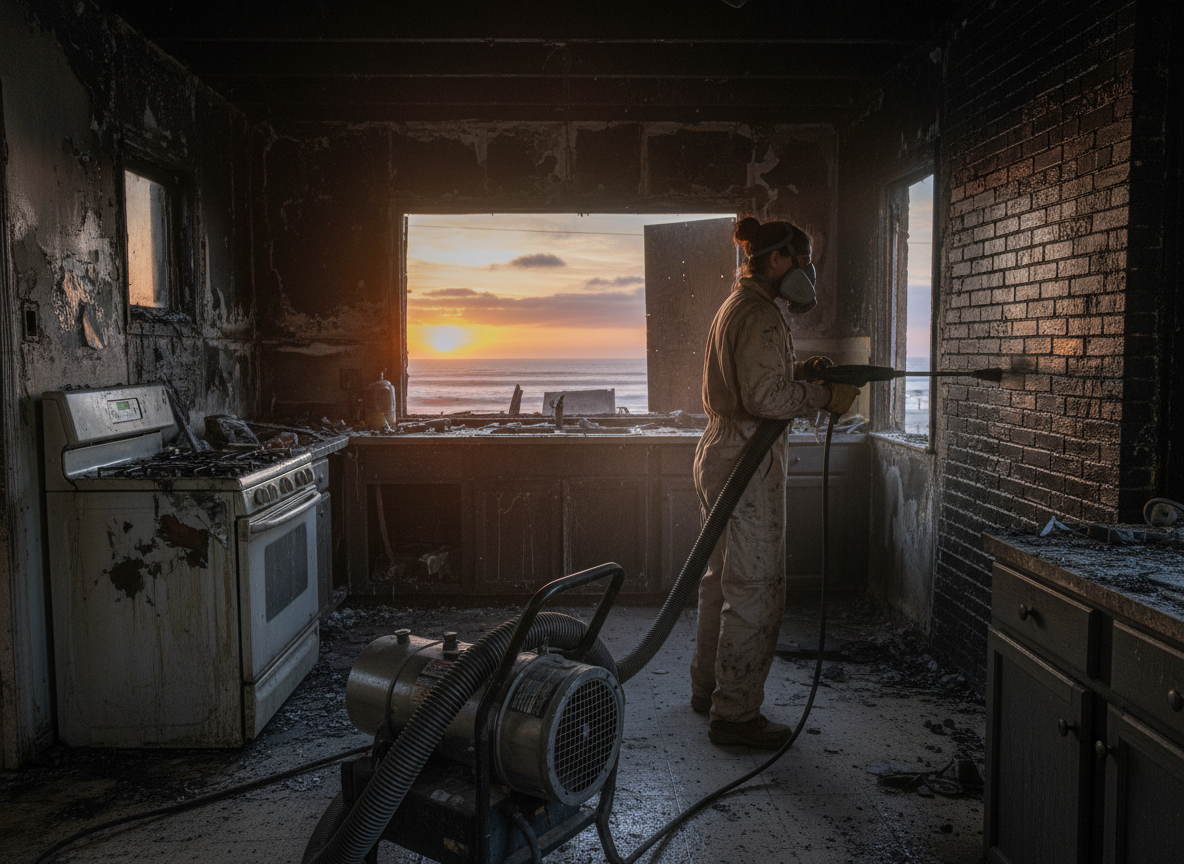
Sunset Beach sits along the Pacific Coast Highway with a mix of mid-century beach cottages and newer elevated homes built on sandy soil. After a fire, the cool, humid marine layer that rolls in most evenings drives smoke and soot deeper into drywall, insulation, and HVAC systems than drier inland fires. Technicians must account for salt air already present in the walls, which can combine with acidic soot to accelerate corrosion on metal fixtures and wiring. Containment starts by sealing off affected rooms with plastic barriers before negative-air machines pull particulates out, preventing migration into neighboring properties along the narrow residential streets.
Many homes here predate modern fire codes, so lath-and-plaster walls and knob-and-tube wiring complicate removal. Crews test surfaces with pH strips because alkaline soot from common household fires requires different neutralizers than acidic smoke from plastics. In Orange County’s mild summers, open windows do not reliably vent odors, so thermal fogging and ozone treatments are scheduled after initial HEPA vacuuming. Coordination with Seal Beach and Huntington Beach fire departments is routine when embers cross city lines during Santa Ana wind events.
Post-cleanup verification includes surface swab testing sent to an independent lab and visual inspection under UV light for hidden residue on textured ceilings common in beach bungalows. Homeowners receive a written scope that lists every room treated and materials removed, allowing direct comparison with insurance adjusters. Work continues around the clock from the Pacific Coast Highway shop so families displaced by a kitchen fire can return before the next high tide brings additional moisture into the structure.
Technician insight
In Sunset Beach, the thing that catches most people out with Fire damage restoration near me is how the nightly marine layer pushes soot into the unsealed crawl spaces under older cottages along Pacific Coast Highway. Homeowners often miss the odor returning days later because they only checked living areas. We always pull up a few floorboards early to check for hidden migration.
Kitchen fire in a 1960s beach cottage
Smoke traveled through the original plaster walls into two adjacent bedrooms after a stovetop flare-up. We found acidic soot lodged in the fiberglass insulation and along the shared wall with the neighboring property. Containment, HEPA cleaning, and targeted drywall removal restored the home; the family moved back within ten days without recurring odor.
How it works
- 1
Emergency Assessment
Technician arrives within the hour, documents visible char, measures smoke migration with particle counters, and photographs every room for the insurance file.
- 2
Containment and Safety
Plastic sheeting and negative pressure isolate the affected zone, electrical hazards are tagged, and standing water from suppression is extracted.
- 3
Soot and Odor Removal
HEPA vacuuming, chemical sponges, and thermal fogging treat porous surfaces; HVAC ducts receive separate agitation and filtration.
- 4
Reconstruction and Verification
Damaged drywall and flooring are replaced, swab tests confirm residue removal, and final walkthrough includes the homeowner and adjuster.
Pricing
Cost depends on square footage affected, number of porous materials involved, and whether HVAC cleaning is required; upfront written estimates provided before work begins.