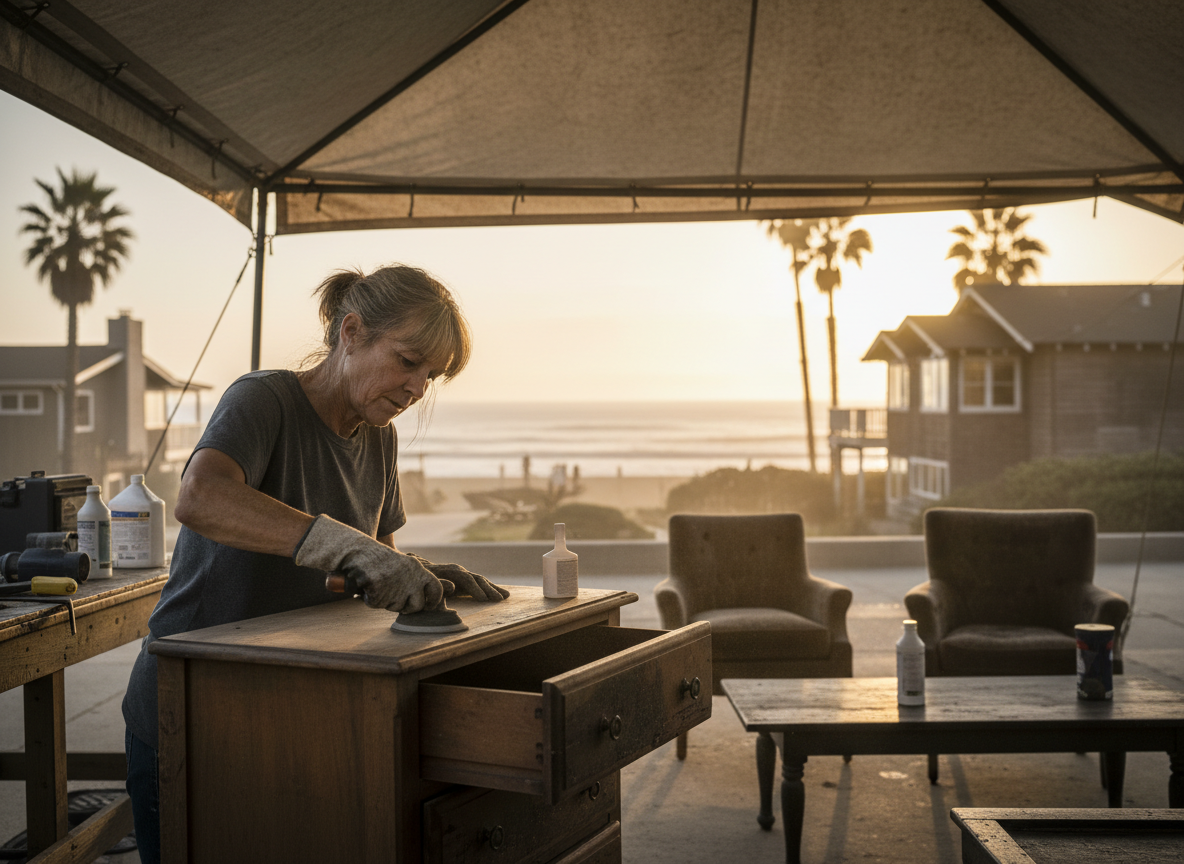
Furniture in Sunset Beach homes often features older oak, teak and upholstered pieces from mid-century builds common along Pacific Coast Highway. After a fire, acidic soot embeds into wood grain and fabric fibers, especially when Orange County firefighters use water suppression in the mild Mediterranean climate. Salt air accelerates corrosion on metal hinges and frames once moisture lingers, requiring immediate neutralization to prevent permanent pitting. Technicians test each piece for hidden charring beneath finishes before deciding on disassembly or in-place treatment.
Upholstery restoration demands careful vacuuming with HEPA filtration followed by pH-balanced emulsifiers that lift soot without driving residues deeper into padding. In coastal humidity, even small amounts of retained moisture can trigger mildew within days, so drying protocols use low-heat airflow tailored to Sunset Beach’s cool summer evenings. Leather items need separate conditioning to restore oils stripped by smoke, while particleboard or veneer pieces frequently require stabilization rather than full cleaning because delamination occurs quickly after water exposure.
Edge cases include smoke odor trapped inside drawer cavities or beneath cushions that only surfaces again during warm afternoons. Homeowners sometimes attempt DIY wiping that spreads oily soot across surfaces, embedding it further into porous woods typical of local rentals. Professional assessment checks for these hidden pockets before any cleaning begins, and items too compromised for safe restoration are documented for insurance with clear photos and material notes.
Technician insight
In Sunset Beach, the thing that catches most people out with fire-damaged furniture restoration is the salt air from the Pacific accelerating corrosion on metal hardware once smoke residues meet even slight moisture from suppression water. Older homes near the pier often have teak or oak pieces where soot hides in grain and under finishes, and homeowners who wipe surfaces themselves just drive the acidic particles deeper before we arrive.
Smoke-Damaged Dining Set Near the Pier
Soot from a kitchen fire had settled into an oak table and chairs in a 1960s Sunset Beach cottage. Inspection revealed acidic residue eating at the brass pulls and hidden char on two chair legs. We disassembled the hardware, neutralized the soot, cleaned the wood grain, and dried everything slowly to avoid warping in the coastal air. The set returned to use without odor or further corrosion.
How it works
- 1
Initial Assessment
Inspect each piece for soot depth, water damage and structural integrity at the Sunset Beach location.
- 2
Pre-Cleaning Stabilization
Remove loose debris and neutralize acidic residues to stop ongoing corrosion from coastal air.
- 3
Deep Cleaning
Apply material-specific agents to wood, fabric and metal, followed by controlled drying.
- 4
Finishing and Odor Removal
Restore surfaces and treat remaining odors with targeted filtration before return to the home.
Pricing
Pricing depends on number of pieces, materials involved and extent of smoke versus water damage.