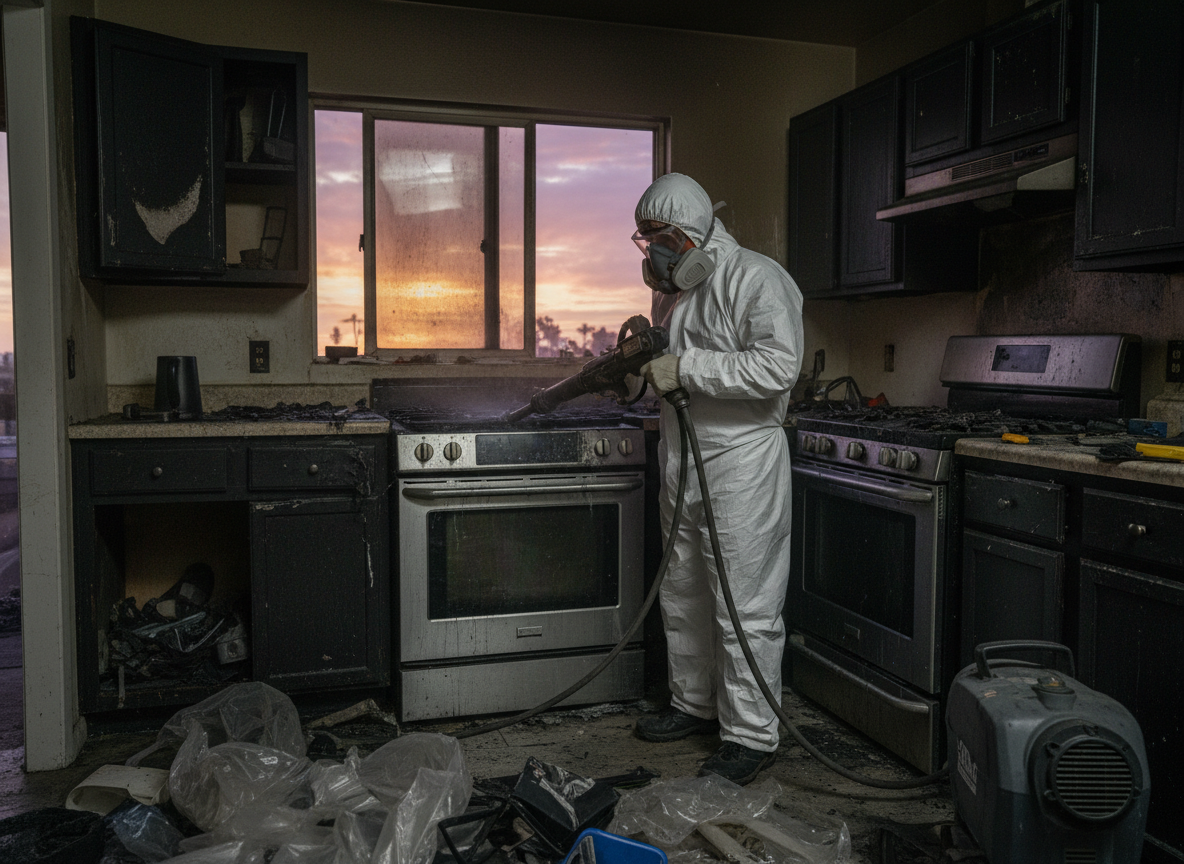
Kitchen fires in Sunset Beach often start from grease buildup on older stoves common in the area's 1960s and 1970s beach cottages. These fires produce heavy soot that embeds in porous materials like drywall and cabinetry, and the mild coastal Mediterranean climate with cool summers means humidity can prolong drying times and allow odors to linger longer than in drier inland spots. Technicians must account for salt air accelerating corrosion on exposed metal vents and appliances during restoration.
Edge cases include fires spreading to adjacent rooms through shared ventilation ducts typical in compact Sunset Beach layouts, or electrical fires from outdated wiring in homes near Pacific Coast Highway. Code compliance requires replacing insulation and checking for hidden ember pockets to meet Orange County fire safety standards. Homeowners should avoid DIY cleaning because improper methods can drive soot deeper into fabrics and HVAC systems.
After containment, crews use HEPA filtration and specialized degreasers suited for coastal properties where ocean moisture interacts with residue. This prevents secondary damage like mold in wall cavities, a risk heightened by Sunset Beach's proximity to Seal Beach wetlands and occasional marine layer fog.
Final verification includes air quality testing and odor neutralization tailored to the cool summer evenings that trap particles indoors longer than in Huntington Beach's more exposed zones.
Technician insight
In Sunset Beach, the thing that catches most people out with Kitchen fire cleanup is how the salt air from the coast speeds up corrosion on metal ductwork and fixtures once smoke residue sits even for a day or two. Older beach cottages along Pacific Coast Hwy often have single-wall construction that lets soot travel into wall cavities faster than in newer Huntington Beach builds, and the cool summer marine layer keeps humidity high enough that odors stick around unless you dry everything aggressively.
Grease fire in a 1970s cottage kitchen
A cooking fire in a Sunset Beach home near the beach spread soot through shared vents into the living room. Inspection revealed residue trapped in the single-wall construction and HVAC lines. Crews contained the space, removed grease films with coastal-rated degreasers, treated ducts, and neutralized odors before air testing cleared the home.
How it works
- 1
Initial Assessment
Technician arrives 24/7 from the Pacific Coast Hwy location, documents the kitchen fire extent, and identifies affected materials in Sunset Beach homes.
- 2
Containment and Safety
Secure the area to prevent soot spread, remove hazards, and set up negative air pressure suited to the compact layouts near the beach.
- 3
Soot and Residue Removal
Apply degreasers and HEPA vacuuming to surfaces, focusing on grease films common from cooking fires in older coastal kitchens.
- 4
Odor Neutralization and Drying
Use ozone or hydroxyl treatments followed by dehumidification accounting for local marine layer humidity.
- 5
Restoration and Verification
Repair or replace damaged items, test air quality, and confirm compliance with local standards before returning the space.
Pricing
Upfront quotes after on-site inspection; final cost depends on fire size, materials affected, and any hidden damage in older Sunset Beach homes.